Fabric & Garment Testing
Which tests a premium garment needs, which method applies in your market, and when in development each result has to be in hand.
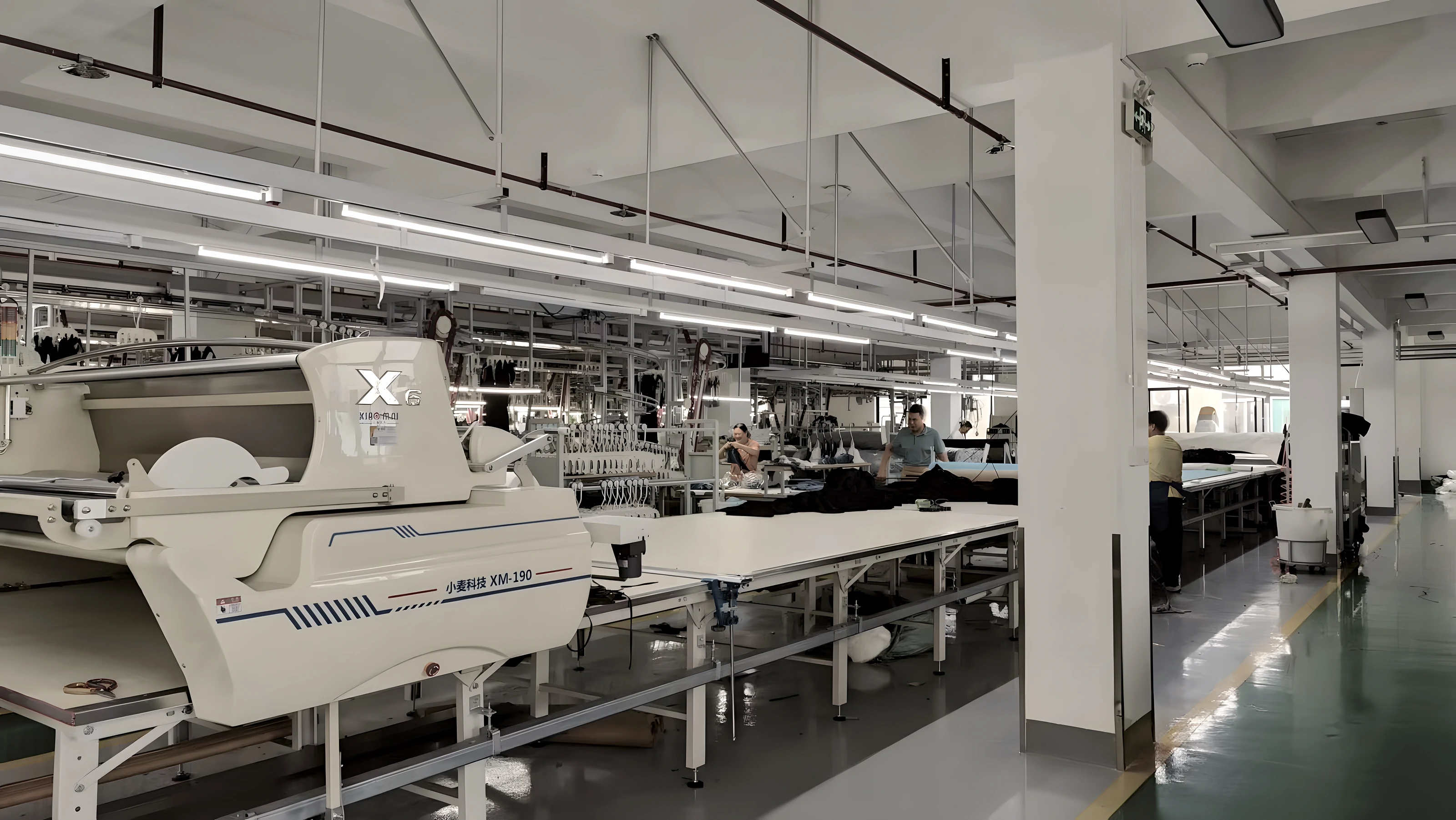
Test the bulk lot, not only the sample.
A swatch that passes in development says little about the roll that arrives for bulk. MANLOR checks shrinkage on each fabric lot before cutting and keeps shade bands per lot, so the pattern and the colour standard match the cloth actually being sewn.
Reportable results — colourfastness, pilling, strength, fibre content and chemistry — come from accredited third-party laboratories, to the method your market or retailer specifies. We agree the test plan with you at the brief stage, so testing never becomes the reason a delivery slips.
When each test happens.
-
01
Fabric approval
Handfeel, weight, shade and shrinkage confirmed before the fabric is accepted for development.
-
02
Before bulk cutting
Bulk lot shrinkage checked and built into the pattern; shade banded against the approved standard.
-
03
Lab testing
Colourfastness, pilling, seam and fibre content tests run on bulk fabric or finished garments as agreed.
-
04
Garment wash test
Finished garments washed to the care label to confirm appearance, seams and measurements after care.
-
05
Pre-shipment
Test reports filed with the inspection report so your compliance file is complete before goods leave.
Common tests and methods.
| Property | ISO method | AATCC / ASTM method | Why it matters |
|---|---|---|---|
| Dimensional stability (shrinkage) | ISO 5077 with ISO 6330 | AATCC 135 / AATCC 150 | Garment measurements after home washing |
| Colourfastness to washing | ISO 105-C06 | AATCC 61 | Fading and staining of other garments |
| Colourfastness to rubbing | ISO 105-X12 | AATCC 8 | Dark shades marking bags and seats |
| Colourfastness to light | ISO 105-B02 | AATCC 16.3 | Fading on display and in wear |
| Colourfastness to perspiration | ISO 105-E04 | AATCC 15 | Discolouration at underarm and collar |
| Pilling | ISO 12945-1 / ISO 12945-2 | ASTM D3512 / ASTM D4970 | Surface appearance of knits and brushed wovens |
| Seam slippage | ISO 13936-1 | ASTM D434 | Seams opening on fluid wovens such as satin and crepe |
| Tensile and tear strength | ISO 13934-1 / ISO 13937 | ASTM D5034 / ASTM D1424 | Durability of lightweight and loosely woven cloth |
| Fibre content | ISO 1833 series | AATCC 20 / AATCC 20A | The composition printed on the label |
| Restricted substances | EN ISO 14362-1 (azo), ISO 14184-1 (formaldehyde), ISO 3071 (pH) | Per retailer RSL | REACH and retailer chemical requirements |
| Flammability (US) | — | 16 CFR 1610 | Required for clothing textiles sold in the US |
Method and pass levels follow your market, your retailer or your own quality manual. Where none is given we propose a plan for your approval.
How testing is run.
Agreed before fabric is booked
The test plan is part of the development plan, so long-lead lab tests start with the bulk fabric, not after it.
Accredited laboratories
Third-party tests are run by accredited labs; you receive the original report, not a summary.
Failures stop the line
A failed result is resolved — re-finish, re-dye or replace — before cutting, never discovered after shipment.
Recommended qualities.
Reference fabrics from our library — or develop your own.
Custom fabric developmentMaterials Testing FAQ.
Which tests do you recommend as a minimum?
For most premium womenswear and menswear: shrinkage, colourfastness to washing and rubbing, and pilling for knits and brushed fabrics. Add seam slippage for fluid wovens and fibre content when the composition is new or blended.
Who pays for laboratory testing?
Third-party lab fees are quoted per test plan and agreed before testing; your retailer may also nominate a lab and pay it directly.
Can you test to our retailer's restricted substances list?
Yes. Send the RSL or test manual; we agree with you which components are tested, at which lab and at what stage.
Do you test garments as well as fabric?
Yes. Garment wash tests confirm measurements and appearance after care, and seam tests are run on finished garments where construction is the risk.
Go deeper.
Avoiding Colour Variation
Shade variation is one of the most visible quality failures — within a garment, between garments in a store, or between a re-order and the first delivery.
Read the guideGuide · 8 min readAQL Quality Control for Premium Apparel
AQL is the language of final inspection. Understanding the tables lets you set a standard that matches your brand — and recognise what AQL cannot do.
Read the guideComplianceCertifications & Compliance
What MANLOR holds, what comes from certified mills, and who is responsible for each claim on your label.
Learn moreDiscuss your quality standard.
Share your quality manual, AQL level or inspection requirements — we will confirm how each gate applies to your product.
What are you looking to develop?
Discuss Your Quality Standard